Tuesday, 11 October 2016

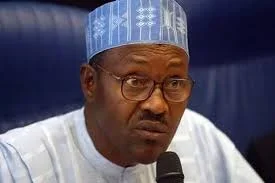
Paden: Buhari has incriminating evidence to jail Jonathan

John Paden, the authorised biographer of President Muhammadu Buhari, says the president had evidence to put former President Goodluck Jonathan in jail for corruption, but he did not want to do so.

In his book, ‘Muhammadu Buhari: Challenges of Leadership in Nigeria,’ Paden, a professor of international studies, wrote that Buhari was more concerned about recovering stolen funds than about jailing anybody.

He said Buhari had letters in his possession showing Jonathan’s request for off-budget funds.

Buhari recently praised Jonathan’s “patriotism” for the post-election stability in 2015 and it would appear – from Paden’s account – that the president was concerned about the political implications of putting his predecessor on trial.

“As of the early months of 2016, it appeared that the EFCC was not going after Jonathan. Nor was it going after former president Obasanjo. The question of the stability of the entire political system seemed at stake,” Paden wrote in chapter 20, page 203.

“In addition, a number of senior military officers who had served as head of state – from Babangida to Abubakar – seemed off limits. Indeed, rumours swirled that if the probes went after senior officers, they might push back, because they had extensive networks in the active military services.

“At the same time, the knowledge such heavyweights possessed could well be traded for immunity, and would help to illuminate the patterns and sources of corruption. Buhari had letters in his possession showing Jonathan’s requests for off-budget funds. But Buhari’s larger purpose was not to put former high-level officials in jail. Rather, it was to retrieve stolen funds and to change the political culture of the country.”

The president’s biographer in chapter 8, page 67 also alleged that Jonathan withdrew “enormous” funds from the treasury as the March 28 presidential election approached.

“The threat of postelection violence was palpable. There would be winners and losers, quite likely with a regional or ethnoreligious profile. The international community was deeply concerned. Was Nigeria on the brink? High level diplomatic demarches were made to both candidates. A highly publicised ‘Peace Accord’ was signed by Jonathan and Buhari. But would they be able to control grassroots supporters,” he wrote, explaining events leading to the election.

“As March 28 approached, enormous sums of money were withdrawn from the treasury by the incumbents.”

Source:thecable
Follow us on twitter :@mmdbozz

Thursday, 6 October 2016

The Richest Countries in Africa

  • The criteria used is the country’s GDP per capita and the Purchasing Power Parity (PPP). I am pretty sure your perception about Africa as probably poor will change after reading this piece

    Are you looking for a continent flowing with milk and honey?

    Then welcome to Africa—the second largest continent in the world. Join me as we x-ray the 10 richest countries in Africa in 2016.

    The criteria used is the country’s GDP and the Purchasing Power Parity (PPP). I am pretty sure your perception about Africa as probably poor will change after reading this piece. Let's roll!
  • 1. Seychelles

    Do you agree that size doesn't count at all times?
    Here’s the richest country in Africa- Seychelles. The country is also the smallest African country in terms of population and its capital is Vitoria.
    Don't be surprised. It is made up of over 100 small islands and it’s the wealthiest African country. Seychelles is located in the Indian Ocean, to the east of Africa. A lot of exporting activities are being carried out in Seychelles to put its GDP per capita at $25,439.92. You need to book a flight to this relatively small but mighty country.

    2. Equatorial Guinea

    I am not an Economic guru, but i know the popular law of demand. Do you remember? In case you don't, let me remind you. "The higher the price, the lower the quantity demanded and vice- versa." This is exactly the situation here.
    However, here, we are dealing with population. Equatorial Guinea is located on the west coast of Africa, and its capital is Malabo. It has a population of less than a million and its economy is structured around agriculture. But guess what; The lower the population, the higher the GDP. The discovery of oil in the country further boosted the GDP per capita which stands at $19.818.11. Amazing!

    Related: The 6 Fastest Growing Economies in Africa

    3. Gabon

    Hello. We are touching down in Gabon, the third on the chart. The country has a population of about a million and the capital is Libreville. Most of the country’s revenue is generated from timber plantation and from oil. Gabon is the third richest country in Africa based on its GDP per capita which stands at $17,053.47.

    4. Botswana

    Are you still there? We are now in Botswana—the fourth richest country in Africa.
    Guess what; The same law still applies. The country not highly populated. The country’s capital is Gaborone. Botswana’s revenues are generated from financial services, mining, tourism and agricultural products. Majority of the country’s population lives below the poverty line but a high GDP per capita that stands at $16,578.59 makes it one of the richest African countries.

    5. South Africa

    Welcome to South Africa. If you say South Africa has the biggest economy in Africa, you are dead right. Reasons? There are employment opportunities in various sectors like manufacturing, textiles, clothing, agriculture, tourism, and so on.
    The economy of SA is also one of the most adequately structured and fully-functional ones in Africa. Pretoria, Bloemfontein and Cape Town are the capitals. The GDP per capita stands at $11,273.08. You can't afford not to invest in this country.

    6. Libya

    Do you remember the name Muammar Gaddafi?
    Welcome to Libya. Just like other African-Arab countries, Libya depends majorly on crude oil for money and majority of their employed citizens, work in the oil sector.
    Over 20% of Libya’s GDP is from service and construction. Libya is the richest African-Arab country. Libya has been in political disunity and turmoil since the fall of the renowned Muammar Gaddafi but it is well-known that they have the largest deposits of oil in the whole of Africa. Its capital is Tripoli and its GDP per capita stands at $10,129.61.

    7. Tunisia

    From Libya, we are now in Tunisia. The population of Tunisia is estimated to be around 11.2 million people and they are a country with a very high GDP.
    Apart from being the seventh richest African country, they are the second richest African-Arab country after Libya. Their economy is being boosted by agriculture and tourism and there’s a really low illiteracy rate. The capital is Tunis and they have a GDP per capita that stands at $9,706.59.

    8. Namibia

    Here is Namibia, the eighth richest country in Africa. The country depends mostly on South Africa for trading, and it is one of the fastest developing countries in Africa.
    Agriculture is the backbone of their revenue, although, manufacturing and tourism contribute a whole lot too.
    Namibia is a commonwealth country that has imputed a lot of government revenue into amenities provision and general development. Its capital is Windhoek and the country’s GDP per capita stands at $7,694.44.

    9. Algeria

    From Namibia, welcome to Algeria. Formerly ranked 10th in 2015 they have leapfrogged to the ninth position in 2016.
    The country gets their main revenue from agriculture and from oil and gas. Banking also contributes to the nation’s revenue from the capital city – Algiers. The country’s GDP per capita stands at $7,541.85.

    10. Egypt

    And here comes the mighty Egypt, the last on the log. Egypt’s economy has been historically agricultural, with cotton as the mainstay. The country is also rich in history and culture. Egypt’s capital is Cairo and its GDP per capita stands at $6,594.

    The Richest Countries in Africa

    RankCountryGDP per Capita
    1Seychelles$25,439.92
    2Equatorial Guinea$19.818.11
    3Gabon$17,053.47
    4Botswana$16,578.59
    5South Africa$11,273.08
    6Libya$10,129.61
    7Tunisia$9,706.59
    8Namibia$7,694.44
    9Algeria$7,541.85
    10Egypt$6,594
    Follow us on twitter :@mmdbozz
  • Africa’s Billionaires List, 2016


  • Africa’s richest have a combined $80.96 billion, a drop of $13.04 billion from $94 billion in 2015

    This year’s Africa’s Billionaires list is dominated by Egyptians, who have a combined net worth of $15.71 billion, just $1.31 billion above the net worth of Nigerian billionaire, Aliko Dangote.

    Dangote continues to soar high according to The African Billionaires 2016 March list released by Forbes, though his net worth took a $1.3 billion compared to end of 2015.

    While this is a positive outlook for Dangote and other wealthy men and women in the list, there were only 24 African billionaires this year, which is a drop by five, compared to 29 the previous year.

    Africa’s richest have a combined $80.96 billion, a drop of $13.04 billion from $94 billion in 2015. The wealthiest group are South Africans with a combined net worth of $22.21 billion. From the 54 African countries, only eight are represented in the list and only two are women.
  • A close look of the Top Ten African billionaires

    1. Aliko Dangote

    Source of wealth: Cement, Flour, Sugar, Salt
    Aliko Dangote comes from a family with a strong business background; his great uncle, Alhaji Alhassan Dantata was dubbed the richest African at the time of his death in 1955. Perhaps it is no surprise that Aliko had interests in business from an early age, he apparently started selling sweets while in primary school just to make money. The Nigerian businessman founded Dangote Group in 1981 and thereafter transformed it into a conglomerate comprised of Dangote Sugar Refinery, Dangote Flour and Dangote Cement. Dangote Cement is the biggest cement producers in Africa with capacity of over 20 million metric tones per annum while Dangote Sugar Refinery boosts being the largest Sugar producers in Africa and third in the world, producing an estimated 800 thousand tons of sugar annually. Dangote has expanded his reach beyond Nigeria, to West Africa and across sub Sahara with major presence in Nigeria, Ghana, and Togo. Forbes estimates his current worth to be $16.4 billion. He has been Africa’s richest person since 2013 when he surpassed Mohammed Hussein Al Amoudi.

    2. Michael “Mike” Adenuga

    Source of wealth: Telecom, Oil, Real Estate
    Mike grew up in the Lagos, Nigeria. Born in 1953, Mike worked as a taxi driver to help fund his MBA at Pace University in New York. He started by making his fortune in trading lace and Coca-Cola. In 1991, Mike then founded Conoil (formerly Consolidated Oil Company), the company operates 6 oil blocks in the Niger Delta. The company has three major operating sectors, White products (Industrial and Aviation Fuel), Lubricants and Liquefied Petroleum Gas (LPG), it mainly engages in the manufacture and marketing various petroleum products. He also owns Globacom, the second largest telecommunications company in Nigeria; it also has operations in Ghana and the Republic of Benin. Globacom has an estimated 32 million subscribers in Nigeria. The second richest Nigerian has an estimated net worth of $10.3 billion.

    3. Nicholas “Nicky” Oppenheimer

    Source of wealth: Diamonds
    Nicky Oppenheimer is the richest person from South Africa. His grandfather Ernest Oppenheimer who founded the Anglo American, a multinational mining company and the current world’s largest producer of platinum. Nicky joined Anglo American as the Personal Assistant to the Chairman in 1968 and quickly moved up the ranks to deputy Chairman in 1983. While he amassed some of his wealth from Anglo American, the major source of his wealth is his inheritance of De Beers, one of the leaders in the diamond industry and Tswalu Kalahari Reserve the largest private game reserve in South Africa. Nicholas succeeded his forefathers as the Chairman of De Beers in 1998 in what is sometimes referred to as the Oppenheimer dynasty thus inheriting the family business. He stepped down in 2012 and liquidated 40% of his DeBeers shares to familiar face of Anglo American for $5.1 billion in cash. The 57 year old has an estimated net worth of $6.6 billion.

    4. Christoffel Wiese

    Source of wealth: Retailing
    Christoffel Wiese grew up in Upington, Northern Cape in South Africa. A lawyer by profession, Christoffer left the Cape bar to join a family business as a Director of Pepkor, which originated as the discount clothing retail chain Pep Stores. His Pepkor group currently operates more than 4000 retails with major operations in South Africa, Australia and Poland. Wiese took brief break from Pepkor to venture into diamond mining and politics. In 1980, he returned to Pepkor as Chairman, Pepkor has recently acquired Shoprite Holdings, which he turned into the largest food retailer in Africa. Shoprite operates 1825 corporates and 363 franchise outlets in 15 countries across Africa employing over 136 000 people. In February 2015, Steinhoff purchased Pepkor for $5.7 billion in cash and stock a deal that resulted with Christoffel owning 17% of Steinhoff. This South African has an estimated net worth of $7.3 billion.

    5. Johann Rupert

    Source of wealth: Luxury Goods
    Johann Rupert grew up in Stellenbosch South Africa. Born in 1950, Johann is the eldest son of Anton Rupert who founded Voorbrand, a tobacco company that was later renamed Rembrandt. The Rembrandt group founded Richemont a holdings Swiss company for leading luxury goods companies and Remgro an investment company with particular interests in food, liquor and home care, financial, and industrial companies. Johann Rupert currently chairs both companies. Rupert has a strong interest in sports, a former cricketer himself, he developed Leopard Creek Golf Club in Mpumalanga South Africa which is constantly ranked in the top three of best golf courses in South Africa and he owns part of Saracens a first division English rugby team. The South African has an estimated net worth of $5.4 billion with luxury goods as his main source of wealth.

    6. Nassef Sawiris

    Source of wealth: Construction, Chemicals
    Nassef Sawiris is the richest person from Egypt. He is the son of Onsi Sawiris a businessman who founded Orascom a conglomerate with primary focus on infrastructure, industrial and high-end commercial projects. Nassef joined his father’s venture in 1982, in 2015 Orascom split into Orascom construction that Nassef serves as its non-executive Chairman and Orascom Construction Industries where he serves as a Chief Executive Officer. Sawiris emerged as the largest individual shareholder of Adidas in October; he holds 6% of Adidas shares, which is approximated to worth about $1 billion. Sawiris recently founded Nile Holdings Investment, a private equity fund that invests in different industries with a major focus in Egypt’s health care sector. The 55 years old graduate of University of Chicago has an estimated net worth of $4.4 billion.

    7. Nathan Kirsh

    Source of wealth: Retail, Real Estate, Self Made
    Nathan Kirsh was born in Potchefstroom, South Africa. He later became a permanent citizen of Swaziland in 1986. Kirsh made his first mark into the business arena when he founded Swaziland Mills, a Swaziland corn-milling company. He later expanded the reach of this milling company to become a dominant food retailer in South Africa. The company overextended its reach by committing to building two-dozen malls; unfortunately South Africa was at the edge to extending increasing its international sanctions, a result of which cost Kirsh most of his fortune. Currently Kirsh’s fortune comes from Jetro Holdings, Inc, which operates Jetro Cash and Carry, one of the leading wholesale cash and carry stores in USA and Restaurant Depots in New York City. The Kirsh Holdings Group owns 50% of Swazi Plaza Properties, which is makes up his biggest investment in Swaziland. Kirsh has an estimated $4 billion net worth.

    8. Isabel dos Santos

    Source of wealth: Investments
    Isabel dos Santos is the richest woman in Africa. She is the eldest daughter of long time Angola President Jose Eduardo dos Santos. Isabel started her venture into the business world as a project manager for Urbana 2000 a subsidiary of Jembas that was contracted for cleaning and disinfecting of Luanda. She later set up a truck business company, this coupled with establishment of the walkie-talkie system paved way for her to move into the telecommunications industry. In 1997, Isabel started Miami Beach Club, her first business and one of the first night clubs beach restaurants in Luanda Island. The Electrical Engineering graduate of King's College owns a number of assets in Angola, including 25% of Unitel, the largest mobile phone company in Angola. Among her diverse investment portfolio is 19% of Banco BPI, Angola’s largest bank and 7% of Galp Energia, an oil and gas company. The 42-year-old Angolan has an estimated net worth of $3.2 billion.

    9. Issad Rebrab

    Source of wealth: Food
    Issad Rebrab is the richest man in Algeria. His industrial career apparently started in 1971, when one his clients suggested he take shares in metallurgical construction company. Issad, a teacher by profession said he took a calculated risk, and in the worst case he knew he could always return to teaching. He joined the industry by acquiring 20% shares of Sotecom, a metallurgical construction business. Issad stands out as one of the few African billionaires who come from modest families, his parents were revolutionaries who struggled for the independence of Algeria. His major installations where destroyed in 1995 by terrorist attack, costing him an estimated $1.1 billion. He came back stronger in 1998 with the foundation of Cevital, one of the largest Algerian private enterprise, with subsidies in agribusiness, distribution, glass industry and real estate. Issad has an estimated net worth of $3.3 billion.

    10. Naguib Sawiris

    Source of wealth: Telecom
    Naguib Sawiris is the eldest of three Onsi Sawiris’ sons. Naguib joined the family business Orascom in 1979. He played an integral role in the growth and diverse portfolio of the company turning it into one of the largest private sector firms. Sawiris, a Masters graduate of ETH Zurich particularly helped establish the railway, information technology and telecommunications, the success of these sectors led to the split of Orascom into Orascom Telecom Holding, Orascom Construction Industries, Orascom Hotels & Development and Orascom Technology Systems. He owns the liberal Egypt TV station ONTV. Perhaps he is most recently known for his desire to buy an Island between to give 100 000 to 200 000 refugees a home, this was after he saw a picture of a three year old Syrian boy who drowned trying to find refuge. The Egyptian has an estimated net worth of $3 billion.
    Global overview
    Even with a slight decline of $1.8 billion from last year’s Forbes Billionaire list, Microsoft's co-founder Bill Gates retains his position as the world’s wealthiest man with a net worth of $77.4 billion. A position he holds for the 17th time in the last 22 years.
    Gates is closely followed by Spaniard Amancio Ortega, who is the brains behind Inditex fashion group, which owns Zara clothing and accessories retail shops
    With $48.9 billion, Facebook's co-founder Mark Zuckerberg has moved up ten spots making him among the ten wealthiest people in the world. Zuckerberg holds the sixth position with his net worth increasing by $15.5 billion from $33.4 billion in 2015.

     Here is a complete list of the African billionaires

    RankNameNet Worth $Source of WealthCitizenshipAge
    1Aliko Dangote14.4 bnCement, Flour, Sugar, SaltNigeria58
    2Mike Adenuga10 bnTelecom, Oil, Real EstateNigeria62
    3Nicky Oppenheimer6.6 bnDiamondsSouth Africa70
    4Christoffel Wiese6.2 bnRetailingSouth Africa74
    5Johann Rupert5.3 bnLuxury GoodsSouth Africa65
    6Nassef Sawiris4.1 bnConstruction, ChemicalsEgypt55
    7Nathan Kirsch3.7 bnRetailSwaziland84
    8Isabel dos Santos3.1 bnInvestmentsAngola42
    9Issad Rebrab3.1 bnFoodAlgeria71
    10Naguib Sawiris3 bnTelecomEgypt61
    11Mohamed Mansour2.5 bnDiversifiedEgypt68
    12Othman Benjelloun1.9 bnBanking, InsuranceMorocco83
    13Mohamed Al Fayed1.9 bnRetailingEgypt87
    14Femi Otedola1.85 bnGas StationsNigeria53
    15Youssef Mansour1.73 bnDiversifiedEgypt70
    16Folorunsho Alakija1.55 bnOilNigeria65
    17Allan Gray1.49 bnMoney ManagementSouth Africa78
    18Koos Bekker1.47 bnMedia, InvestmentSouth Africa63
    19Yassen Mansour1.39 bnDiversifiedEgypt54
    20Aziz Akhannouch1.25 bnPetroleum, DiversifiedMorocco55
    21Patrice Motsepe1.15 bnMiningSouth Africa54
    22Abdulsamad Rabiu1.1 bnDiversifiedNigeria55
    23Onsi Sawiris1.09 bnConstruction, TelecomEgypt86
    24Mohammed Dewji1.09 bnDiversifiedTanzania40
    Follow us on twitter :@mmdbozz
  • Politics Budget Padding: '22 Top Federal Officials Sacked By President Buhari'


    About 22 top officials of the federal government were sacked for their different roles in the padding of the 2016 budget.

    This revealaton was contained in Buhari’s authorised biography, ‘Muhammadu Buhari: The Challenges of Leadership in Nigeria’, written by Prof. John Paden and presented to the public on Monday.

    Apart from the 22 top official, Paden said a total of 184 civil servantswere disciplined.

    He said the President viewed the padding as an attempt to scuttle his administration’s innovations, hence his decision to wield the big stick against the culprits.

    The author wrote, “Buhari himself was frustrated by earlier padding of the budget by bureaucrats in some of the ministries.

    buh.jpe

    “This was interpreted by the Buhari team as an attempt to scuttle the innovations proposed by the President by inflating their costs.

    “When Buhari found out, he was reported to be angry and ordered a purge of the ministries involved from the Director-General down.

    “Twenty-two top officials were dismissed, including the budget director. In all, 184 civil servants were disciplined.”

    He added that even after the budget had been adjusted downward by the National Assembly, the country would still have to borrow $3.5bn, as a result of the drop in oil prices.      


    Follow us on twitter :@mmdbozz

    Friday, 30 September 2016

    Early morning sex is beneficial to health — Professor

    Prof. Musa Yakubu of University of Ilorin has said that having sex in the early morning lowers blood pressure and reduces risks of heart attack.

    Yakubu of the Department of Biochemistry made the assertion in a paper, “Knocking Down the Barriers to Four O’Clock Activities and Reproductive Inadequacies”, presented at the 163rd Inaugural lecture of the university on Friday.

    He said that having sexual intercourse, three to four times a week, was good for love life.

    “Research has shown that sex boosts immune system by stimulating the body’s first line of defence and production of immunoglobulin A (IgA), against cold and fever,” he said.

    The News Agency of Nigeria (NAN) reports that immunoglobulin A is one of the most common antibodies in the body system.

    Antibodies are proteins made by the immune system to fight bacteria, viruses, and toxins.
    Yakubu said that sex also regulates menstruation in women by influencing the levels of lutenizing hormones that controls menstrual period and promote better sleep.

    According to him, the act of sexual intercourse also release the feel-good chemical, known as oxytocin, which enhances closeness with one’s partner and makes people feel happier for a longer period of time.

    “Lovemaking of about 20 minutes reduces 150 calories,” he said.

    The professor of Biochemistry postulated that sex is the most powerful creative force given to human by God for pleasure and deep companionship.

    Yakubu, however, noted that any marriage in which the man or woman could not enjoy sexual intercourse or satisfy their partner in bed was a dead marriage.

    He said that lack of sexual satisfaction had led to the collapse of many marriages in Nigeria, and urged couples to seek for solutions to the problem.

    “Sexual and reproductive dysfunctions are common among men and women in Nigeria, which necessitates regular screening and check-ups,” he said.

    He also said that traditional medicines had been authenticated to cure sexual dysfunctions.

    Source:dailytrust
    Follow us on twitter :@mmdbozz

    Wife of Nigeria’s Central Bank Governor, Emefiele, Kidnapped

    SaharaReporters has learned that a group of heavily armed kidnappers yesterday abducted Margaret Emefiele, the wife of Nigeria’s Central Bank Governor, Godwin Emefiele.  


    A source close to Mr. Emefiele told our correspondent that Mrs. Emefiele was kidnapped along the Benin-Agbor Road.

    Our source disclosed that the kidnappers have made contact with their victim’s husband, adding that they were demanding a huge sum in ransom. 

    Mrs. Emefiele’s kidnap represents one of the most high-profile kidnap cases in 2016. 

    Source:
    saharareporters
    Follow us on twitter :@mmdbozz

    Wednesday, 28 September 2016

    The MTN Group is under investigation for illegally transferring over $12 billion out of Nigeria

    Somehow it seems the MTN Group just can’t catch a break in Nigeria. It’s like a one step forward, two steps back thing. First, it was the brouhaha with the Nigerian Communications Commission, then there’s that N16 billion copyright law suit that was filed by the Copyright Society of Nigeria (COSON). And now? Now, the Nigerian Senate is investigating the allegation that MTN illegally transferred $12 billion dollars out of Nigeria over a 10-year period. 

    Senator Dino Melaye made the allegation last Thursday at the Senate and requested permission to investigate further. In his statement, he said, “MTN Nigeria paid a sum of $284.9 million on the 6th of February, 2001, to purchase their licence of operations in this country. Between 2006 and 2016, through four Nigerian Banks and a serving minister of the Federal Republic of Nigeria, MTN moved over $12 billion out of Nigeria. That is about half of our external reserves. If I get the nod of the Senate I will want to bring a substantive motion on the next legislative day with substantiated facts to buttress this position.”

    He closed by saying, “All hands must be on deck to recover every loot in the country. We are in a precarious situation and now is the time to recover every stolen money in the country.” As expected, his request was approved by the Senate President, Bukola Saraki.

    This is the second time there’s been speculation about MTN Nigeria’s books. Sometime last year, Premium Times carried out an investigation regarding this same tax evasion issue and it was revealed MTN evades tax by using transfer pricing to move their profits offshore, and creating artificial operating costs. If the Senate’s investigation proves this allegation to be true, it’ll mean MTN has been evading tax in Nigeria – its biggest market – for about 10 years.


    Put on your seat belts, guys. We’re in for another ride.

    Source:techcabal
    Follow us on twitter :@mmdbozz

    Only Two Tribes In Nigeria

    Not many remember what happened in Riyom, Plateau state many years ago. In case you’re among the many who didn’t, this story of mine will re...